Zirconia inlays / onlays
Zirconia inlays and onlays made to the cavity prepared by the dentist, rebuilding cusps with a metal-free material.
Fabrication service
Zirconia cores made from the canal and prepared-tooth shape supplied by the dentist, supporting all-ceramic restorations.
A post and core is placed in a root-treated tooth to support the crown above it. A zirconia post and core contains no metal and is usually chosen when the dentist plans an all-ceramic restoration.
The dentist assesses the root, the remaining tooth structure and the occlusion before deciding.
Core retention depends on root length and shape, the luting technique and chewing forces. Technicians fabricate to the agreed design; clinical decisions remain with the treating dentist.
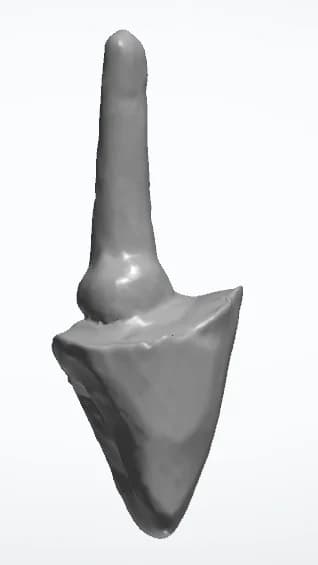
Reference image
Illustrative image; individual cases may differ.
This information is for reference only. The indication, the choice of restoration and the cementation technique are decisions for the treating dentist.
Quick comparison
A summary of the main differences between the six categories. Every case has its own indication; please discuss with your dentist to choose the right solution.
| Restoration | Structure | Aesthetics | Strength and load | Common indications |
|---|---|---|---|---|
| Zirconia implant restorations | A zirconia crown or bridge seated on dental implants. | Metal-free; the aesthetic level depends on a monolithic or layered design. | Depends on bone, occlusion and number of implants; assessed by the dentist. | Replacing one or several missing teeth with implants. |
| Zirconia post & coreViewing | A core placed in a root-treated root canal to support the crown. | Metal-free, which limits dark shadows at the cervical area. | Depends on root length, root shape and chewing load. | Root-treated teeth with little remaining tooth structure. |
| Zirconia inlays / onlays | An indirect restoration sitting inside the cavity (inlay) or covering one or more cusps (onlay). | Metal-free, with a colour that blends with the tooth. | Depends on the quality of cavity preparation and the remaining tooth structure. | Large caries or fractures, replacing old fillings; preserving tooth structure. |
| Porcelain veneers | A thin porcelain shell bonded to the outer surface of the tooth. | Mainly intended to improve the shape, size and shade of the front teeth. | Thin, so it needs proper care and avoiding biting on hard objects. | Front teeth differing in shape or shade, small gaps, slight chipping of the incisal edge. |
| Full-contour zirconia | Monolithic zirconia with no porcelain overlay. | The effect at the front teeth can differ from a layered framework. | With no veneering layer, the risk of chipping is lower. | Posterior teeth under heavy load, limited occlusal space, bruxism. |
| Layered zirconia crowns | Two layers: a zirconia framework inside and a veneering ceramic outside. | Can reproduce colour and translucency close to natural teeth; suited to high-aesthetic zones. | The framework carries the load; the veneering ceramic may chip under unsuitable loading. | Front teeth and areas needing a high aesthetic effect. |
Related services
Zirconia inlays and onlays made to the cavity prepared by the dentist, rebuilding cusps with a metal-free material.
Veneers made from the smile design and models supplied by the dentist, with control over shape, shade and thickness.
Restorations made entirely of zirconia with no porcelain layering on the outside; the full shape is designed and milled with CAD/CAM.
Contact
Tell us the category, quantity and material you need. The Doan Huy team will get back to you with advice and a quotation.