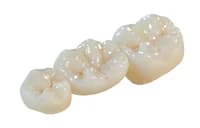
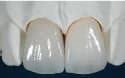
Tooth preparation is the key to a successful restoration. However accurately an all-ceramic restoration is fabricated, it is unlikely to perform well on an abutment that was prepared incorrectly. This article summarises general principles; specific values must always be checked against the material manufacturer’s instructions.
1. Conserve tooth structure
Remove only the tissue required to make room for the restorative material; over-reduction affects the pulp and reduces retention. Minimum thickness must follow the material’s guidelines: monolithic zirconia usually needs less space than a porcelain-layered zirconia framework.
2. Abutment shape and retention
- Walls converge slightly towards the occlusal surface so the restoration seats easily and still retains.
- Sufficient abutment height; avoid a very short or perfectly round abutment.
- Internal line angles are rounded; sharp angles concentrate stress in an all-ceramic restoration.
3. Finish line
The finish line should be clear, continuous and smooth so the laboratory can identify the restoration margin precisely. For all-ceramic restorations a finish line of adequate width with a rounded floor is usually preferred, with no sharp edges. Its position relative to the gingival margin should consider aesthetics and cleansability.
4. Occlusal clearance
Reduce the occlusal surface and incisal edge sufficiently, checking in maximum intercuspation and in lateral movements, so the restoration is not too thin in load-bearing areas.
5. Soft-tissue control and impression
The finish line must be clearly exposed at impression or scanning: haemostasis, appropriate gingival retraction and a dry field. Data without a clear finish line forces the laboratory to guess and reduces fit.
6. Communication between dentist and laboratory
Send the shade, clinical photographs, the opposing model and notes on occlusion. If the abutment has problems (insufficient space, unclear margin) the laboratory should report back before fabrication rather than try to complete the case.
This content is technical reference; the treating dentist is responsible for clinical decisions.